


 580
580Hair Extensions for Caucasian Hair: What Actually Works (And What Doesn’t) You’ve been thinking about extensions. Maybe your hair is fine and won’t hold a curl. Maybe you’re growing out a bad cut, or you just miss the thickness you used to have. But every time you look online, it’s all “100% Remy” and “24 inches” – nothing about your hair. Fine, straight, slippery, maybe highlighted within an inch of its life.


Hair Extensions for Caucasian Hair: What Actually Works (And What Doesn’t)
You’ve been thinking about extensions. Maybe your hair is fine and won’t hold a curl. Maybe you’re growing out a bad cut, or you just miss the thickness you used to have. But every time you look online, it’s all “100% Remy” and “24 inches” – nothing about your hair. Fine, straight, slippery, maybe highlighted within an inch of its life.
Let’s fix that. Here’s what actually matters when you have Caucasian hair and you want extensions that don’t ruin your scalp, your wallet, or your morning routine.
---
First, the real problem: fine hair + extensions = ?
Most Caucasian hair – especially if it’s light blonde or fine-textured – is not great at holding things. Tape slips. Beads slide down. Keratin bonds become obvious lumps. And if you go too heavy, you get tension headaches and, worse, traction alopecia (yes, that’s the medical term for “my hairline ran away”).
So the #1 question isn’t “how long?” or “what color?”
It’s: What method will stay put without breaking my hair?
---
Matching the method to your real life
Instead of a boring spec table, here’s how to choose based on you.
You have very fine, fragile hair – and you’re scared of damage
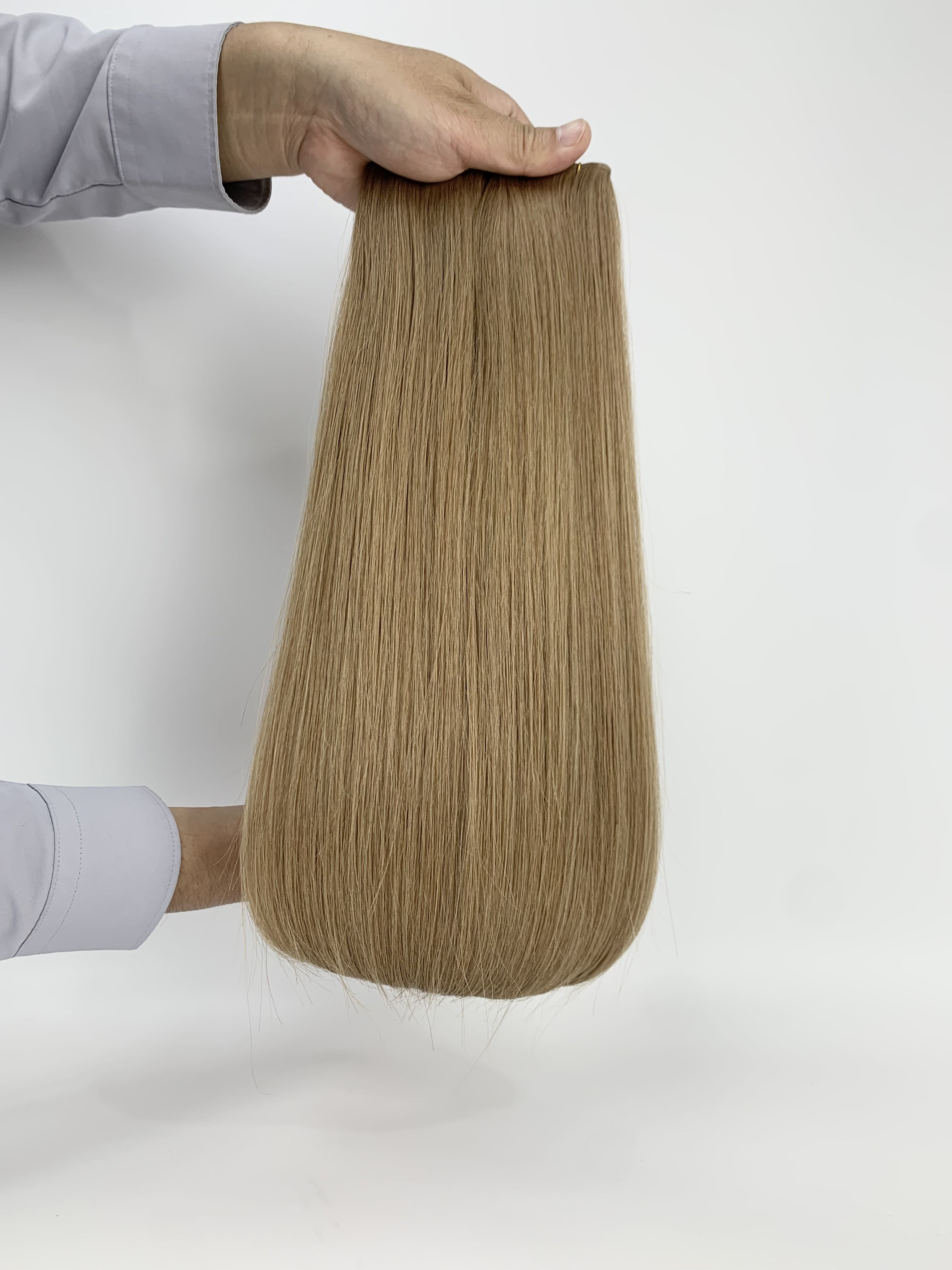
Try Halo extensions or clip‑ins first. No glue, no heat, no tension. A Halo sits on a wire like a headband – you literally can’t feel it. Clip‑ins are great for weekends or date nights. They’re not 24/7, but that’s the point. Your hair gets a break.
Real talk: If a stylist tries to put heavy machine‑wefted tape‑ins on hair that feels like spider silk, walk out.
You have medium-density hair and want something low‑maintenance
Tape‑ins are your friend – but only if your stylist uses lightweight wefts (1.5g or less per strip). On Caucasian hair, heavy wefts pull and shed. Good tape‑ins last 6‑8 weeks, you can wash normally, and you forget they’re there. The catch? You can’t use oily serums near the tape. That’s it.
You have thick, coarse Caucasian hair (yes, it exists – think Eastern European or naturally curly)
Micro‑rings or K‑tips work beautifully. Your hair texture actually grips the beads or bonds. You’ll get 3‑4 months out of them. Just know that K‑tips need heat to install – fine for you, not great for fine hair.
You’re active – gym, swimming, hot yoga
Skip the tapes (sweat breaks them down faster). Go with micro‑rings or a sew‑in weave if your hair is thick enough. Or do what many active clients do: keep a set of clip‑ins for going out, and go natural at the gym. No shame in that.
---
Real‑life scenarios: when do people actually wear extensions?
Not everyone wants mermaid length. Here’s what clients really come in for.
The “I just need volume” client
She doesn’t want longer hair. She wants her ponytail to look like something. Solution: short tape‑ins (14‑16 inches) in her exact root color, placed only in the crown and sides. No length added – just density.
The “I’m growing out a pixie” client
She’s in the awkward mullet phase. Solution: a Halo extension or a few clip‑in pieces that blend with her natural length. She wears them 3‑4 days a week while her real hair catches up.
The bride
She wants curls that last through dinner and dancing. Fine Caucasian hair drops curl in two hours. Solution: tape‑ins or K‑tips give her hair something to hold onto. The curls stay all night. Bonus: the extensions make the updo look twice as full.
The postpartum hair loss client
Her hair is coming back but it’s patchy and weird. She doesn’t want permanent extensions – just something to get her through the next 6 months. Recommendation: lightweight tape‑ins or a Halo. Avoid anything that pulls on weak roots.
---
Frequently asked questions – the ones people actually ask
“Will extensions make my thin hair even thinner?”
If done wrong, yes. If done right, no. The risk is when stylists use heavy wefts or apply too much tension. A good stylist leaves your hairline free, uses small sections, and never forces more hair than your scalp can handle.
“Can I still wear my hair in a ponytail?”
Depends on the method. Tape‑ins and micro‑rings usually let you pull hair up – you just have to hide the bonds. Sew‑ins make high ponytails tricky. Halos and clip‑ins come out, so no problem.
“How do I wash without tangling everything?”
Keep your head upright in the shower (don’t flip your hair forward). Shampoo your scalp, not the extensions. Condition from mid‑length down – never on the attachments. Then gently squeeze, don’t rub. Air‑dry the lengths, but blow‑dry the roots and bonds on cool. Mildew is real if you leave them damp.
“Why did my last extensions turn into a matted mess after two weeks?”
Three guesses: you slept with wet hair, you used a regular brush (stop – buy a loop brush), or your stylist used non‑Remy hair. Non‑Remy tangles into a nest. Remy hair doesn’t.
“Can I color my extensions to match my highlights?”
You can, but only if they’re 100% human hair and you go to a pro. Never use box dye on extensions – they grab color unevenly. Most stylists prefer to order pre‑colored wefts that are custom‑toned to your hair.
---
A few things no one tells you (but should)
· You will shed more natural hair with extensions. That’s normal – your hair sheds 50‑100 strands a day anyway, but extensions trap the shed hairs. When they’re removed, it looks like a lot. It’s not. Don’t panic.
· Tape‑ins get sticky in humidity. Not unbearable, but you’ll feel them. Use a little dry shampoo on the roots (avoiding the tape) to reduce the tacky feeling.
· Sleeping is different. You’ll learn to braid your hair or put it in a low, loose ponytail. Silk pillowcases aren’t a gimmick – they really help.
· Cheap extensions are expensive. The $100 set on Amazon will tangle, shed, and look plastic by week three. Then you’ll buy the good ones anyway. Just start with good ones.
---
Still not sure? Here’s a simple decision path
Ask yourself three questions:
1. Do I want to wear them every single day?
Yes → tape‑ins, micro‑rings, or K‑tips.
No → clip‑ins or Halo.
2. Is my hair finer than a baby’s?
Yes → Halo or very light tape‑ins. No heavy methods.
No → you have more options.
3. Am I willing to go back to a stylist every 6‑8 weeks?
Yes → tape‑ins or sew‑ins.
No → micro‑rings (last longer between visits) or clip‑ins (DIY).
---
The bottom line – and why this matters for you
Hair extensions for Caucasian hair aren’t complicated. They just need someone to tell you the truth. The truth is: your fine, slippery, highlighted hair can handle extensions – but not every method, not every weight, and not every stylist.
If you take one thing from this page, let it be this: buy for your hair type, not for the length on Instagram. Start lighter than you think you need. Find a stylist who does more than one method. And when in doubt, try a Halo or clip‑ins first – they’re the lowest risk and the easiest to love.
---
Need help choosing? Send us a photo of your hair (natural light, no filters) and tell us what you want to fix – thinness, length, or just better ponytail days. We’ll reply with a real recommendation, not a robot answer.
add whatsapp 008618863251821 to order